June 23, 2026
Is a Hydraulic Double-Acting Ceramic Piston Pump the Smartest Way to Feed High-Solid Filter Press Slurries Without Frequent Seal Failure?
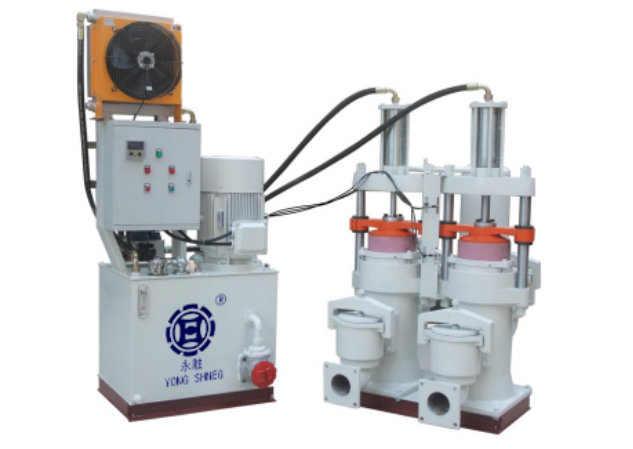
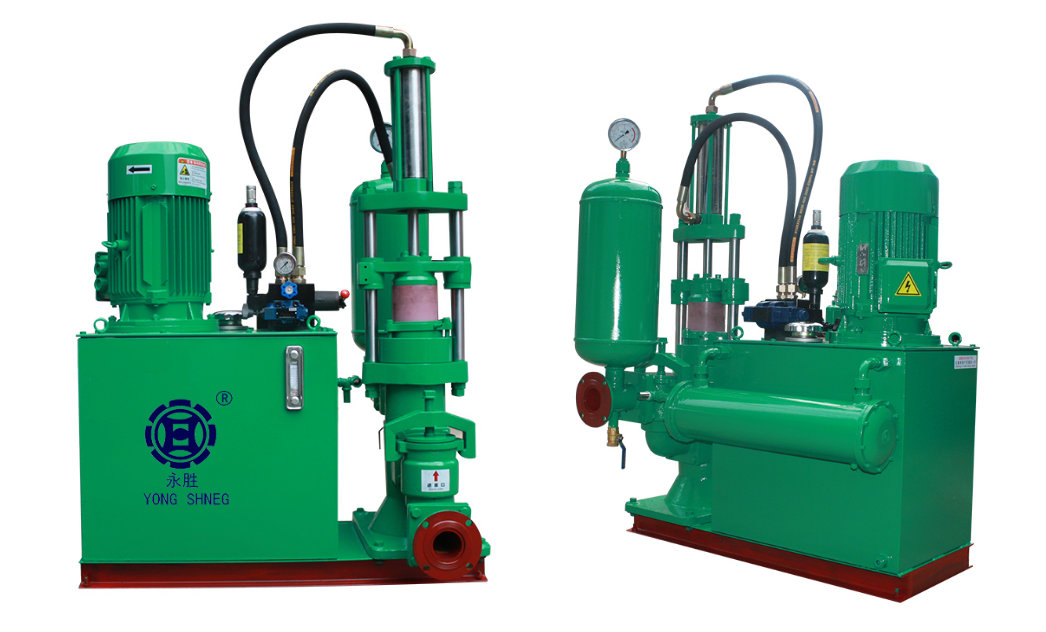
In mining, ceramics, and chemical processing plants, the slurry feed pump for a filter press is a critical bottleneck. Traditional centrifugal slurry pumps suffer from rapid impeller and seal wear when handling abrasive, high-density slurries (solid content > 50–70%). Diaphragm pumps can work but often lack the pressure or flow range needed for large chamber filter presses. The YBB Intelligent Ceramic Piston Slurry Pump — Hydraulic Double-Cylinder Double-Acting Ceramic Plunger Pump for Filter Press Feeding & High-Solid Suspension Transport (Solid Content up to 70%+, VFD-Compatible, Low Pulsation Design) is purpose-built to solve this. Driven by a hydraulic power unit and reciprocating ceramic plungers, it delivers near-constant flow, stepless pressure build-up to match the filter press cake-forming cycle, and exceptional resistance to abrasive wear—thanks to the alumina/zirconia ceramic piston surface. But how does the hydraulic double-acting design actually work, and why does it outperform centrifugals and single-cylinder piston pumps in this application?
How the YBB Hydraulic Ceramic Piston Pump Works
The YBB series is a positive displacement, double-cylinder double-acting (DCDA) piston pump:
-
Electric Motor → Gear Oil Pump (Hydraulic Power Unit): Draws low-pressure hydraulic oil from the tank, delivers high-pressure oil.
-
Directional Control Valve: Alternately routes high-pressure oil to the two hydraulic cylinders, causing their pistons to stroke in opposite phases.
-
Hydraulic Piston → Ceramic Plunger (Piston Rod Extension): The hydraulic cylinder piston rod is rigidly coupled to a high-purity alumina or zirconia ceramic plunger that reciprocates inside the slurry cylinder.
-
Slurry Suction & Discharge:
-
On the forward stroke: slurry is drawn through the suction valve into the cylinder.
-
On the return stroke: the discharge valve opens, slurry is pushed into the discharge line toward the filter press.Because it is double-acting, both strokes of each cylinder contribute flow (one end discharges while the other suctions), smoothing the output compared to a single-acting design.
-
A Variable Frequency Drive (VFD) on the electric motor allows stepless flow adjustment (typically 0–100% of rated capacity) to match the filter press’s filling → pressing → cake-forming stages.
Why Ceramic Piston (Plunger) Matters for Abrasive Slurries
|
Feature
|
Benefit vs. Metal Plunger / Rubber Diaphragm
|
|---|---|
|
High Hardness (≥ 85 HRA / ~1200 HV)
|
Highly resistant to abrasive wear from SiO₂, kaolin, ceramic body, mineral tailings
|
|
Low Surface Roughness (Ra ≤ 0.2 µm)
|
Reduces friction & packing gland wear; minimizes slurry adhesion
|
|
Chemical Inertness
|
Withstands pH 2–12 (depending on ceramic grade), resists corrosion better than carbon steel or SS
|
|
Smooth Surface → Better Seal Life
|
PTFE / chevron packing lasts longer when running against a glazed ceramic surface
|
|
No Porosity
|
Unlike cast metal, will not absorb process fluids or harbor contamination
|
Typical ceramic: 95% alumina or partially stabilized zirconia (PSZ) for added fracture toughness in high-pressure duty.
Key Advantages for Filter Press Feeding
1. Pressure Ramp Matches Cake Formation
Filter presses need low pressure / high flow initially (filling) → high pressure / low flow (cake compaction). The YBB pump’s VFD lets you program a pressure ramp: start at 0.3–0.5 MPa to fill chambers quickly, then auto-increase to 1.0–2.5 MPa (model-dependent max 4.0 MPa or higher on request) as resistance builds. This avoids over-packing early and reduces cloth blowouts.
2. Handles Very High Solid Content
Unlike centrifugals (which stall or cavitate above ~40–50% solids depending on particle size), the YBB pump can transport suspensions with solid content up to 70% by weight (tested on ceramic glaze, coal-water slurry, kaolin, mineral concentrates). Flow is nearly independent of slurry viscosity within the pump’s pressure envelope.
3. Low Pulsation via Double-Cylinder Design
Two cylinders 180° out of phase partially cancel each other’s flow pulses. Residual pulsation can be further dampened with an inline pulsation dampener if the filter cloth or frame is sensitive.
4. Long Seal & Valve Life with Proper Maintenance
Suction/discharge valves are typically replaceable hardened seat & disc assemblies (stainless steel or ceramic-faced). Packing glands are accessible. With ceramic plungers, packing life often exceeds 2,000–4,000 hours in typical ceramic/kaolin service.
Typical Specification Ranges (YBB Series)
|
Parameter
|
Typical Range
|
|---|---|
|
Flow Rate
|
1–60 m³/h (model-dependent; larger custom on request)
|
|
Max. Discharge Pressure
|
1.6 MPa / 2.5 MPa / 4.0 MPa (verify per model)
|
|
Solid Content Capability
|
≤ 70% by weight (depends on particle size distribution & rheology)
|
|
Slurry Cylinder Diameter
|
Ø80–Ø200 mm typical
|
|
Stroke Length / Speed
|
Adjustable via VFD; typical 20–60 strokes/min
|
|
Drive Power
|
5.5 kW – 90 kW (matched to pressure × flow)
|
|
Hydraulic System Pressure
|
10–16 MPa (integral HPU)
|
|
Control Mode
|
Local panel / Remote PLC / VFD + Pressure Transmitter Feedback Loop
|
Exact values vary by model — refer to individual datasheet / proposal drawing.
Common Applications Beyond Filter Press Feeding
-
Ceramic Body / Glaze / Engobe Transfer: From ball mill discharge to storage silo or spray dryer feed tank.
-
Coal-Water Slurry (CWS) Feeding: To gasification units or storage tanks.
-
Kaolin / Bentonite / Non-Metallic Mineral Suspension Transport: Pipeline transfer over moderate distances (check NPSH & line loss).
-
Mine Tailings (selected grades) / Concentrate Transfer: Where particle size distribution allows pumping without excessive line blockage.
-
Chemical / Food Suspension (hygienic version with polished wetted parts): On request.
Sourcing & Project Engineering Checklist
When requesting a proposal for YBB Intelligent Ceramic Piston Slurry Pump for Filter Press Feeding:
-
✅ Slurry Details: Solid content (%), particle size distribution (d₅₀ / d₈₀), specific gravity of liquid phase, abrasiveness, pH, temperature.
-
✅ Required Flow @ Filter Press Fill Stage & Max Pressure @ Cake-Forming Stage.
-
✅ Suction Condition: Flooded suction or suction lift? NPSHa available?
-
✅ Discharge Line Length / Elevation → confirm pressure drop allowance.
-
✅ Control Preference: VFD included? PLC communication protocol (Modbus / Profibus / analog 4–20 mA)?
-
✅ Spare Parts Kit: Packing sets, valves, seals — recommended for first order.
Conclusion: When You Need Pressure, Solids Tolerance, and Longevity in One Pump
The YBB Intelligent Ceramic Piston Slurry Pump — Hydraulic Double-Cylinder Double-Acting Ceramic Plunger Pump for Filter Press Feeding (Solid Content up to 70%+, VFD-Compatible) fills the gap between wear-prone centrifugals and pressure-limited diaphragms. Its ceramic plungers resist abrasive slurry attack, the hydraulic drive provides controllable high pressure, and the double-acting twin-cylinder layout smooths flow while allowing precise ramping to match the filter press cycle. For plants dewatering ceramic slip, coal slurry, kaolin, or mineral concentrates, it is often the lowest total-cost-of-ownership option over a 5–10 year horizon.