January 16, 2026
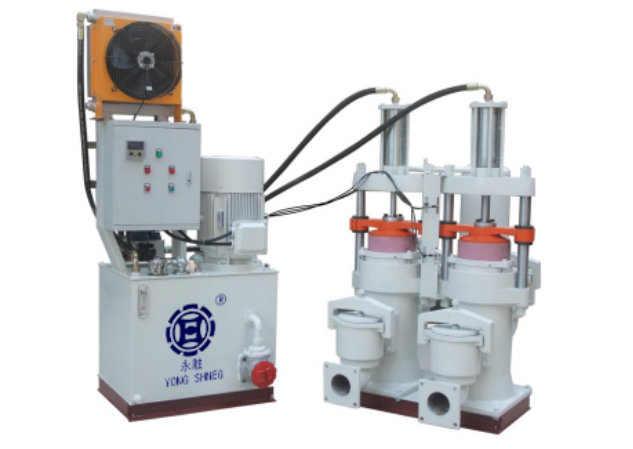
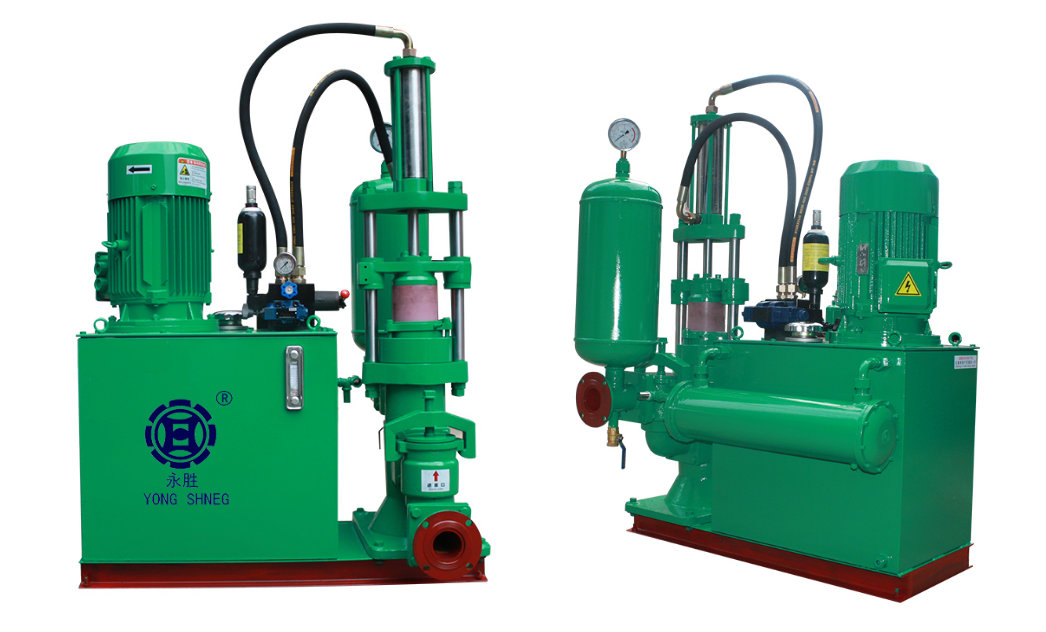
Why Is an Intelligent Variable Frequency Ceramic Piston Slurry Pump the Game-Changer Your Plant Keeps Overlooking?
Still Bleeding Cash on Spare Parts? Let’s Talk Real Numbers
If you’ve ever watched a maintenance crew wrestle with a seized piston on a Friday night, you know downtime isn’t just frustrating—it’s expensive. One mid-size copper concentrator in Zambia told me (yeah, over a quick WhatsApp call) that every hour of lost throughput cost them roughly US$18 000. After swapping their rubber-lined crankshaft unit for an Intelligent Variable Frequency Ceramic Piston Slurry Pump, mean time between failures jumped from 11 weeks to 51 weeks. Same slurry, same 55 % solids by weight—totally different wallet impact.
So, What Makes This Pump “Intelligent” Anyway?
Traditional PD pumps run at one speed: flat-out. The VFD brain inside the new ceramic piston range continuously tweaks stroke rate to match real-time density and flow demand. Picture cruise control for your slurry line. The PLC pulls data from a non-nuclear density meter plus a simple magnetic flow tube, then adjusts rpm within ±1 % accuracy. Result: you no longer throttle a valve to waste energy; the pump just backs off. Energy audits across three Australian iron-ore plants showed 27–34 % kWh savings the very first quarter.
Ceramic Liners and Pistons—Marketing Hype or Science?
Short answer: sintered silicon-carbide (SSiC) has a Vickers hardness of 2 800 HV. That’s almost diamond territory. In a Kansas-based cement tailings trial, the OEM measured liner wear at 0.03 mm per 1 000 hours on a 45 % solids slurry containing 125 µm sharp silica. Rubber or chrome-iron parts in the same loop lasted roughly 1 600 hours before clearance doubled. Do the math: one ceramic liner equals roughly six conventional cycles, and you skip four rebuild windows. Oh, and because the surface is micro-smooth, internal slip drops, so you also gain volumetric efficiency—around 7 % in that test.
Variable Frequency + Positive Displacement—Do They Even Get Along?
Skeptics argue that PD pumps prefer constant speed to maintain suction stability. True—if you ignore modern dampening tech. The latest ceramic piston range uses a tri-chamber pulsation dampener tuned by the same VFD algorithm. It anticipates pressure spikes and pre-opens a gas-charged membrane, cutting peak pulsation by 65 %. Translation: your 8-inch HDPE line won’t dance the cha-cha, and downstream flotation cells see steadier feed. One phosphate mine in Morocco trimmed reagent overdosing by 11 % after installing these pumps, saving US$160 k on xanthate per year.
Installation Checklist—Don’t Let Footprint Fears Kill the Project
Let’s be honest, “ceramic” sounds brittle and bulky. Reality check: SSiC liners are only 8 mm thick and sit inside a duplex stainless sleeve. Total wet weight per 100 m³/h pump is 17 % lighter than a rubber-lined crankshaft model. Baseplate dimensions? Identical to legacy ANSI-5 frames, so you can literally drop the new skid on existing anchor bolts. Pro tip: order the pump with NEMA Premium IE4 motor plus WEG variable drive pre-wired in a NEMA-4X panel; field wiring shrinks to four terminals and one Profibus plug.
ROI Calculator—Show Me the Money
We ran a quick model for a 250 m³/h copper tailings duty: head 28 bar, 1.8 SG, 5 000 h/yr. Assumptions: electricity US$0.11/kWh, maintenance labour US$45/h, ceramic spare parts 2.2× the price of chrome-iron. Net present value over five years? US$1.04 million in favour of the Intelligent Variable Frequency Ceramic Piston Slurry Pump. Payback period: 11.3 months. Yep, you read that right—eleven months.
Common Myths, Busted
Myth #1: Ceramics Crack Under Thermal Shock
SSiC conducts heat at 120 W/m·K—better than many steels. A 40 °C Delta-T during a flush cycle is child’s play. The real risk is mechanical impact, so the OEM ships each liner inside a shrink-fit steel jacket; you’d have to try pretty hard to chip it.
Myth #2: VFDs Create Resonance Hell
Only if you spec the wrong inertia ratio. These pumps come with a low-speed 4-pole motor plus integrated flywheel; critical speed is purposely set 30 % above operating range. No resonance, no squeal, no busted piping.
Myth #3: Rebuilding Ceramics Is Impossible
You don’t rebuild the liner—you replace it. Swap time is under 45 minutes because the piston pulls out the front; no need to decouple the drive. Compare that to a full chrome-iron re-sleeve at 8 hours and the labour delta alone justifies the upgrade.
Hidden Green Bonus: Scope-3 Emissions
Every kWh you trim in a concentrator saves roughly 0.92 kg CO₂ on a mixed grid. At 27 % energy cut, our 250 m³/h pump prevents 440 t of CO₂ over five years. That’s worth €26 k in EU ETS credits at today’s €60/t—money you can reinvest in plant optimisation. Sustainability bean counters love it, and so do lenders offering green loans at 50 bp below prime.
Which Industries Are Signing Up First?
- Copper & nickel flotation: high head, high solids, high wear.
- Iron-ore magnetite: density 2.3 SG, sharp particles, 24/7 duty.
- Phosphate acidulation: mild corrosives plus 40 % solids.
- Sands & aggregates: variable throughput, seasonal demand—perfect for VFD.
Quick Spec Cheat-Sheet
| Flow range | 5–400 m³/h |
| Pressure | Up to 40 bar |
| Solids handling | 65 % by weight, 250 µm max |
| Frequency range | 5–60 Hz, constant torque |
| Liner life | 8 000–12 000 h typical |
Final Thought—Don’t Wait for the Next Catastrophic Failure
Plants that schedule the upgrade during the next planned shutdown save 30–40 % on total installed cost versus emergency replacement. Book a site survey now, bank the energy savings, and when your competitor is still swapping chrome liners at 2 a.m., you’ll be home watching Netflix. And, hey, if you need only one takeaway from this whole ramble: spec the Intelligent Variable Frequency Ceramic Piston Slurry Pump once, sleep easy for years. Your accountant (and your maintenance crew) will thank you—promise.