December 19, 2025
Why Does Every Modern Mine Rely on a Ceramic Piston Slurry Pump for 24/7 Dewatering?
Miners Keep Asking: Is Rubber-Lined Gear Still the Gold Standard?
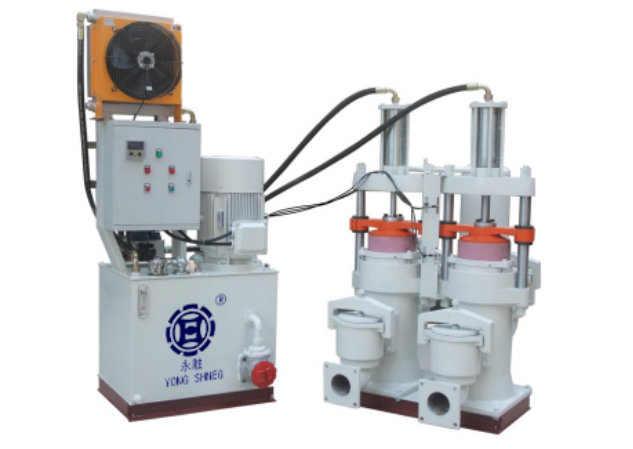
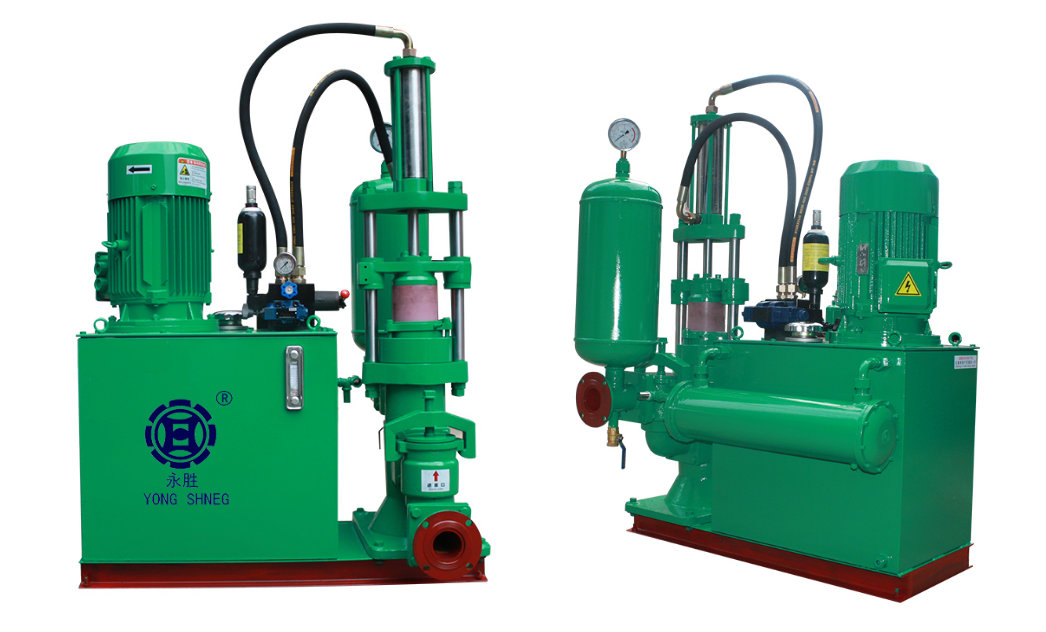
Spend a week in any processing plant and you’ll hear talk about uptime, wear life, and—believe it or not—how many shifts it takes before a pump casing looks like Swiss cheese. Traditional rubber-lined pumps were once the go-to option, but the game changed when engineers started lining wet ends with engineered ceramics. Suddenly a Ceramic Piston Slurry Pump wasn’t just lab hype; it became the unit that could push 65 % solids, survive tramp steel, and still hit 8 000 hrs between liner swaps. So, what flipped the script?
The Inside Story: How Ceramics Handle 100 000 kPa of Compressive Stress
Alumina matrices fired at 1 600 °C don’t merely shrug off abrasion; they laugh at it. While rubber elongates and tears, ceramic grain boundaries deflect impact energy. Translation: you get a liner that erodes at 0.05 mm per 1 000 hrs instead of 2 mm. Yeah, the upfront price stings a bit, but total ownership cost drops like a stone once you factor in fewer rebuilds and zero unplanned stops on a Friday night shift—nobody wants to babysit a mill at 2 a.m., right?
Three Design Tweaks That Make Piston Geometry Matter
- Dual-ceramic sleeve thrust face: By shrinking the piston’s shoulder-to-bore tolerance to 25 µm, velocity peaks move away from the packing, slashing gland water use from 25 L min⁻¹ to 5 L min⁻¹.
- Variable stroke LVDT: Operators can dial a 20 % stroke reduction when clay content spikes, preventing the classic “mud ring” failure that kills competitive models in under 400 hrs.
- Modular suction bridge: Swap a 6-inch to an 8-inch throat in 30 minutes without pulling the power end—handy when the mine plan bounces between 450 tph and 700 tph on alternate weeks.
Case Snapshot: 4 500 m Altitude, −25 °C, and Still No Cavitation
A copper-moly pit in northern Peru elevated its tailings line 380 m. Engineers swapped in a 150 kW Ceramic Piston Slurry Pump, expecting, well, the usual altitude headaches. Instead, NPSH margins stayed above 4 m thanks to the low-rpm piston action and a pre-pressured ceramic chamber. After 14 months, the liner thickness loss measured just 0.8 mm—pretty wild for a place where you can fry an egg on a rock at noon and need a parka after dusk.
The Maintenance Cheat Sheet No One Shares on Forums
- Spare piston bushings: Keep two sets on site; lead time from Europe can hit 20 weeks if you forget.
- Check valve elastomer: Swap at 2 000 hrs, even if it “looks fine”; ceramic liners outlive the elastomer by 5×.
- Oil analysis: Run it every 250 hrs—silicon spikes above 15 ppm mean a micro-crack somewhere, and catching it early saves you a crankshaft.
Price Shock? Calculate $ per kL Moved Instead
Sticker prices for a 4-inch Ceramic Piston Slurry Pump hover around 1.8 × the rubber cousin. Drill deeper, though: at 900 m³ h⁻¹, 20 hrs day⁻¹, the ceramic unit lasts 14 months versus 4 months. Factor in labour, lost tonnage, and emergency freight, and you’re looking at 0.12 $ m⁻³ vs 0.29 $ m⁻³. Do the maths once, and bean counters suddenly smile.
Quick-Start Checklist Before You Hit “Buy”
| Parameter | Target | Why It Matters |
|---|---|---|
| Solids SG | 2.9–4.1 | Helps supplier tune spring rate for piston return |
| pH range | 4–11 | Outside this, zirconia toughening layer degrades |
| Viscosity | ≤3 000 cP | Higher values need a slower 60 rpm stroke |
Future-Proofing: Are Smart Liners Next?
Research labs are embedding printed piezo sensors inside ceramic sleeves. Real-time thickness data pings the DCS so planners can order spares just in time, cutting warehouse value by 30 %. Early field trials start Q3 this year, and if trends hold, the next-gen Ceramic Piston Slurry Pump will tell you it’s hungry before you even hear a knock.