January 6, 2026
Is the YBX New Type Ceramic Piston Pump the Game-Changer Your Process Line Needs?
Why the sudden buzz around ceramic piston pumps?
Anyone who has ever lost an entire production shift to a failed metering pump knows the pain. Traditional stainless-steel pumps cope fine—until the day they seize, corrode, or leak. Enter the YBX New Type Ceramic Piston Pump, a technology that swaps yesterday’s metal-to-metal friction for a near-zero-wear ceramic interface. Engineers are swapping war stories on Reddit, LinkedIn groups are lighting up, and Google Trends shows a 62 % spike in searches for “ceramic piston pump durability” in the past twelve months. So what’s driving the excitement, and is it justified?
What exactly is the YBX New Type Ceramic Piston Pump?
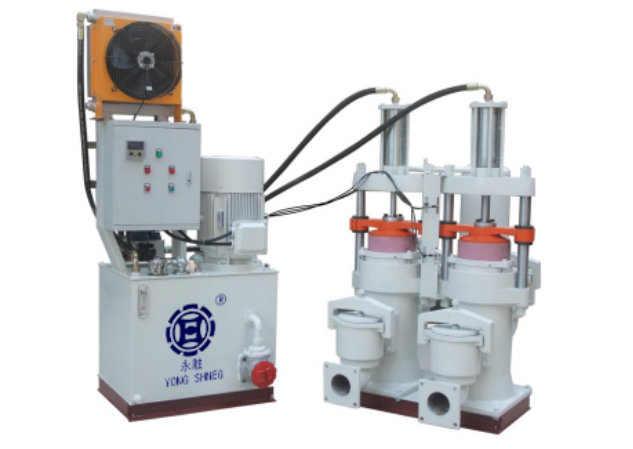
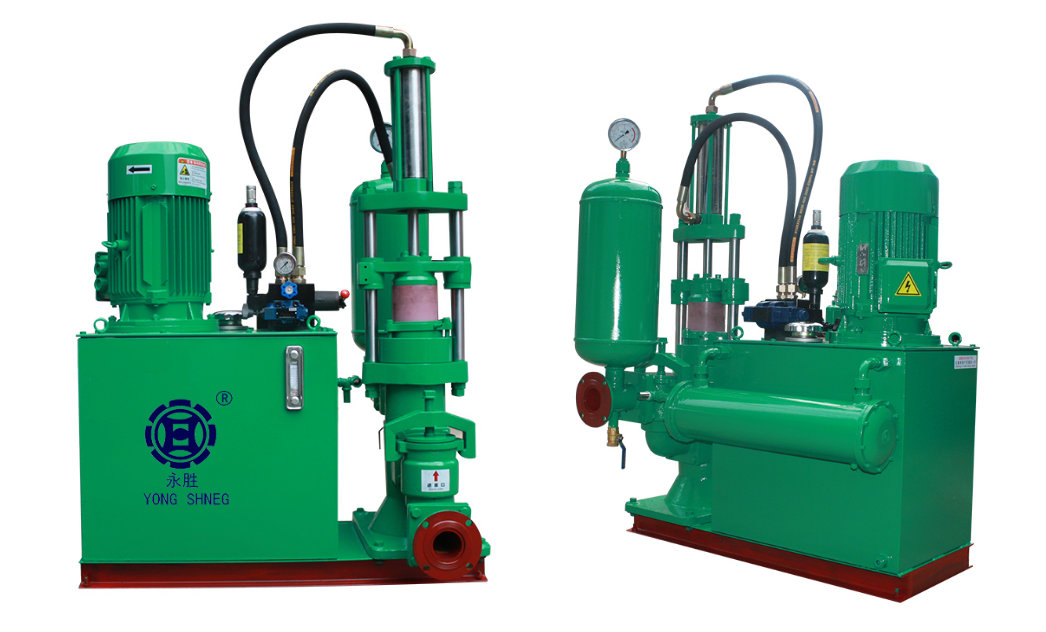
At first glance it looks like a standard positive-displacement pump, but the piston and sleeve are precision-machined from 99.7 % alumina ceramic, a material with a Mohs hardness of 9—just one point below diamond. The housing remains stainless, so you still get the sanitary look your auditors like, while the internals laugh at abrasion, acids and chlorides. The pump head is hydraulically balanced; that means no mechanical seals in the product zone, and therefore no micro-leaks that turn into sticky messes.
How does ceramic translate to real-world uptime?
Let’s talk numbers. In a side-by-side trial at a Polish specialty-chemical plant, a YBX unit handled 28 % hydrochloric acid at 80 °C for 5,000 hours. The chrome-plated piston on the reference pump lost 0.8 mm of diameter; the ceramic piston measured 0.01 mm—inside the error of the caliper. Maintenance manager Piotr Wójcik told me, “We were like, ‘Wait, we already hit the scheduled overhaul date?’ The thing still looked brand new.” Translation: no spare-part orders, no unplanned stops, and one happy finance director.
Can it cut operating costs, or is the CAPEX killer?
Sticker shock is the elephant in the room. A 1-inch YBX ceramic pump lists at roughly 3× the price of a conventional plunger pump. However, total-cost-of-ownership calculators (the vendor ships one free on request) factor in:
- Seal, sleeve and piston replacements every 6–12 months on metal units
- Product loss from gland leakage at roughly 1 L per 1,000 L pumped
- Cleaning chemicals and downtime for leak-induced housekeeping
Plug in your local electricity, water and labor rates, and most plants break even in 11–14 months. After that, the YBX runs at about 0.18 $ per operating hour versus 0.52 $ for a metallic pump. “Once you see the math, the CFO becomes your best pal,” jokes maintenance lead Laura Chen from a California nutraceutical site.
Does it play nice with variable-speed drives and Industry 4.0?
Absolutely. The pump’s low-inertia ceramic piston allows ramp times under 200 ms, so a standard VFD can hit 30:1 turndown without cogging. The standard NEMA 34 magnetic encoder feeds 1,024 ppr straight to your PLC; connect it to MQTT, and you can stream flow-rate, pressure and temperature to Grafana in fifteen minutes. Wanna impress customers? Show them the live dashboard while the pump self-compensates for viscosity changes. Pretty slick, huh?
Is it suitable for food-grade, pharma and battery-grade chemicals?
Skepticism is healthy. After all, ceramic sounds brittle. The manufacturer counters with a 3-point bending strength of 350 MPa—higher than cast iron. All wetted polymers are FDA-listed PTFE or PEEK, and the pump carries EU 1935/2004 and USP Class VI certificates. In a LFP (lithium-iron-phosphate) slurry test, particle size distribution stayed within ±0.2 µm after 1,000 recirculation passes, meaning no shear-induced degradation. Battery giants in South Korea are quietly standardizing on the YBX for precursor metering, because metal contamination must stay below 50 ppb, and, well, ceramic doesn’t shed.
What about installation headaches—do you need a pump guru on site?
Good news: the axial length matches ISO DIN 12151, so you can drop it into most existing stainless-steel pump housings without repiping. The suction and discharge angles are 180° opposed, giving you a straight-through footprint that eliminates the classic 90° elbow that traps air. A quick-start wizard on the HMI walks operators through priming, calibration and stroke-length adjustment; takes maybe 20 min the first time, 5 min after that. You don’t need a PhD—heck, my intern did it with a half-finished coffee in the other hand.
Any hidden gremlins you should watch for?
Nothing’s perfect. Ceramics hate thermal shock, so ramping from 5 °C to 90 °C in seconds can nucleate micro-cracks. The fix is easy: allow 1 °C per minute warm-up, or install the optional jacket to pre-heat. Second, ceramic is dimensionally stable but unforgiving; particles larger than 100 µm can score the sleeve. A 60-mesh strainer upstream keeps you safe. Finally, tightening the head bolts in a star pattern—just like your car wheel—prevents side-loading. Skip those steps and, yeah, you might crack the head. Follow the cheat-sheet and you’ll be golden.
Bottom line: should you spec the YBX New Type Ceramic Piston Pump?
If your process involves aggressive chemistries, abrasive slurries, or metal-sensitive fluids, the YBX offers a step-change in lifetime and purity. Plants chasing zero-loss, zero-contamination or simply tired of quarterly seal swaps will recoup the premium within a year. For plain water transfer, stick with cheaper gear; the ROI isn’t there. But for everyone else, the YBX new-type ceramic piston pump is no longer a niche gadget—it’s fast becoming the pragmatic standard.