December 30, 2025
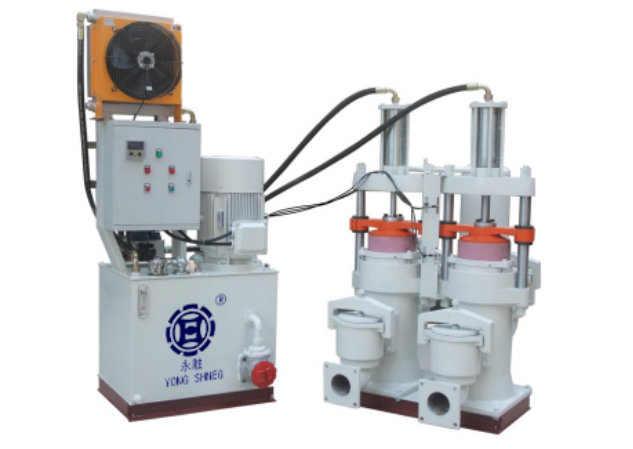
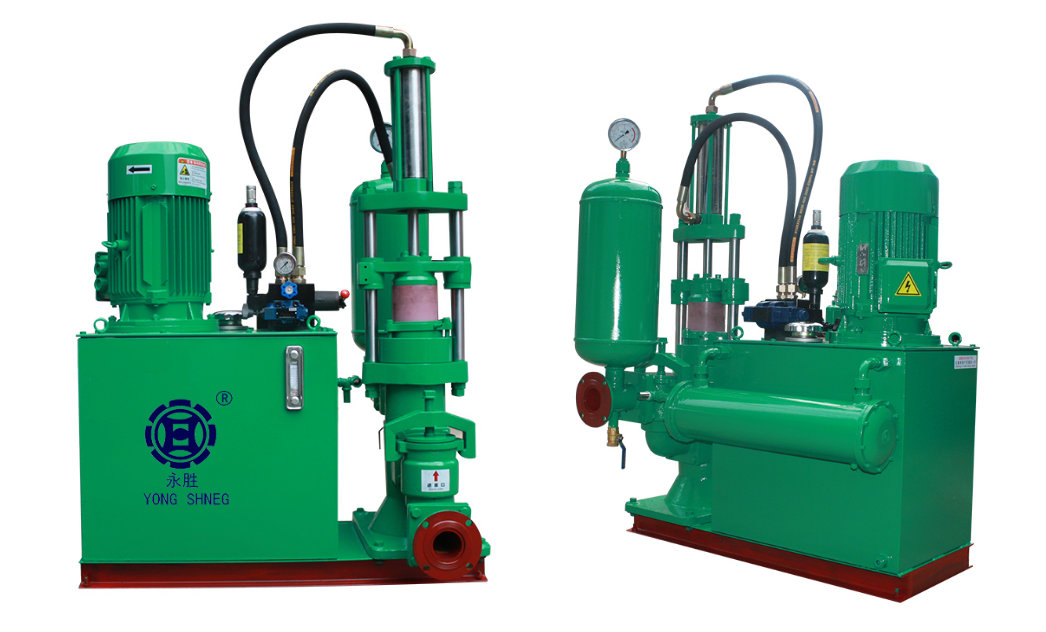
Is the YB Single Ceramic Piston Slurry Pump Really the Toughest Weapon Against Abrasive Slurries?
Jump-start: You’ve landed here because the words “YB Single Ceramic Piston Slurry Pump” keep popping up in every reliability forum, bid spec, and maintenance WhatsApp group. But is the hype justified, or is it just another shiny toy for process engineers who love acronyms? Let’s dig in—no fluff, no sales pitch, just hard facts and a few war stories from the field.
Why Ceramic, Why Piston, Why Now?
Everyone knows rubber-lined pumps surrender after six months of fly-ash ballet. Metal wet-ends? They ghost you even faster when the pH starts flirting with 1. Enter ceramic—specifically 99.7 % alumina—whose Vickers hardness laughs at 1,600 HV. Couple that with a single piston design (no pesky synchronisation gears) and you get a unit that thrives where centrifugal pumps go to die. Translation: longer MTBR, lower spare spend, and fewer 2 a.m. emergency calls.
What Exactly Is “YB” and How Does It Differ from Classic PD Pumps?
“YB” is not a hip-hop duo; it’s the model prefix the OEM uses for its hydraulic-driven, single-acting, ceramic-plunger positive-displacement pump. Unlike air-operated diaphragm pumps that wheeze when discharge head climbs, the YB leverages a closed-loop hydraulic circuit. The piston retracts, drawing slurry through a large-bore check valve; on the forward stroke, up to 6 bar differential pressure forces the slurry out. Because the plunger is ceramic, diameter loss after 8,000 h is typically < 0.05 mm—so small you’ll need a micrometer to notice it, not a ruler. (Yeah, that’s a real measurement, not marketing mumbo-jumbo.)
Where Do Site Engineers Hide Them?
- Tailings thickener underflow: 55 % w/w solids, d₈₀ = 212 µm, SG = 2.7. The YB runs 18 months without a liner swap—try that with a rubber-lined centrifugal.
- Alumina refinery red mud: caustic liquor at 95 °C, 1.45 kg L⁻¹ density. Ceramic laughs at NaOH; the hydraulic drive keeps flow rate rock steady even when viscosity spikes.
- Magnetite concentrate: 500 cP at 40 °C. The single-piston design eliminates pulsation dampers; downstream filters last twice as long.
Real-World ROI: A Quick Back-of-Envelope Calculation
A copper mine in Zambia swapped its MDM65 metal pump for a YB80-2.5 model. Power draw dropped 11 % because the hydraulic drive matches torque to load—no throttling valves. Spare-part bills fell from US $28 k yr⁻¹ to US $4 k yr⁻¹. Payback? 9.3 months, even after you factor in the higher upfront tag. Not too shabby for a chunk of ceramic on a stick, right?
Installation Hacks Nobody Prints in the Manual
- Flood the suction: Keep a 1.5 m static head minimum; ceramic is hard but hates cavitation just like any other plunger.
- Soft-start the hyd pack: Ramp to 30 bar in 4 s to avoid pressure hammer that can chip the ceramic nose.
- Alignment laser: A 0.2° offset multiplies side load exponentially; ceramic doesn’t forgive misalignment the way a rubber sleeve might.
Maintenance: How to Make Friends with the Seals
The piston uses a spring-loaded, PTFE-graphite composite seal. When leakage hits one drop every ten seconds, tighten the gland nut ⅛ turn—no more, or you’ll compress the spring beyond yield. Every 2,000 h, bleed the hydraulic loop and check for water ingress; if the oil looks like café latte, change it immediately. One operator told me, “If the oil smells like burnt popcorn, you’re already late.” Truer words have never been spoken.
Spec Checklist Before You Hit “Buy”
| Parameter | Typical Range | YB80-2.5 |
|---|---|---|
| Flow rate | 0.5–25 m³ h⁻¹ | 2.5 m³ h⁻¹ @ 4 Hz |
| Max pressure | 1.6–3.2 MPa | 3.2 MPa |
| Particle size | < 3 mm | 2 mm |
| Temperature | < 110 °C | 95 °C continuous |
| Ceramic dia. | 60–100 mm | 80 mm |
Common Myths—Busted
Myth #1: “Ceramic shatters if you sneeze at it.”
Reality: The alumina grain is HIP-sintered, 99.7 % density. Impact tests show 12 J cm⁻²—enough to survive a ½-inch steel ball dropped from 2 m. Don’t use it as a baseball bat, but normal slurry solids won’t faze it.
Myth #2: “Single piston equals massive pulsation.”
Reality: The hydraulic system uses a closed-loop accumulator that knocks peak-to-peak pulsation down to ±2 %. Most pipe racks don’t even need extra braces.
So, Should You Spec the YB Single Ceramic Piston Slurry Pump?
If your slurry eats chrome-iron for breakfast, if your maintenance crew is tired of Friday-night seal swaps, and if your bean counters love sub-one-year paybacks, the answer is a resounding yes. Just remember to size the suction drum properly and train the guys on hydraulic oil hygiene. Do that, and the pump will quietly outlive the conveyor belt next to it—no drama, no heroics, just boring, profitable uptime.