December 23, 2025
How Can a High Efficiency Membrane Filter Press Cut Your Operating Cost by 30%?
Every plant manager dreams of squeezing more profit out of the same footprint, yet hidden water, energy, and labor costs keep eating away at the bottom line. If you have ever stared at rising disposal fees or watched cake moisture creep back up after a so-called “optimised” cycle, you are not alone. The real question is: what single piece of equipment can flip the script without a full process overhaul?
What Exactly Is a High Efficiency Membrane Filter Press?
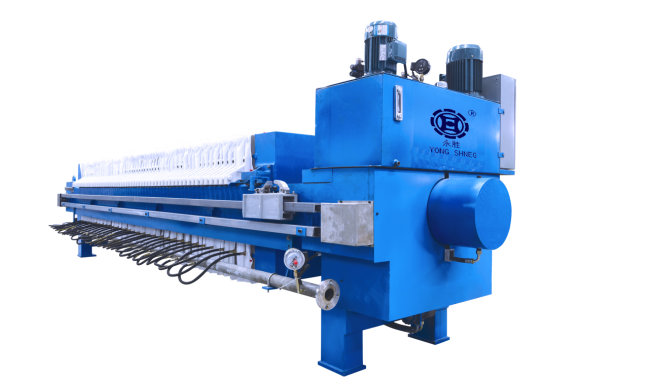
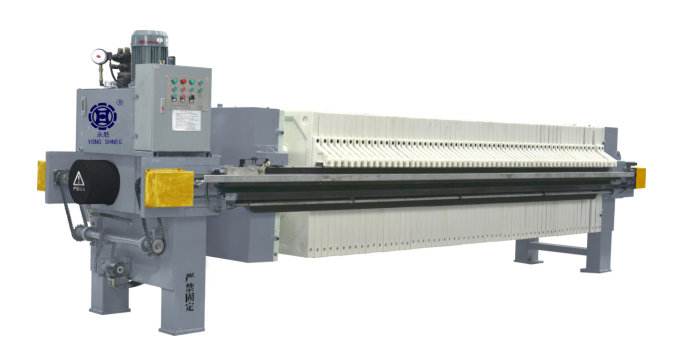
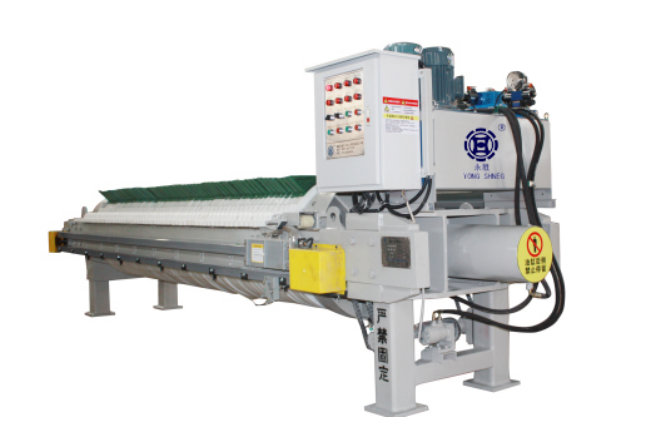
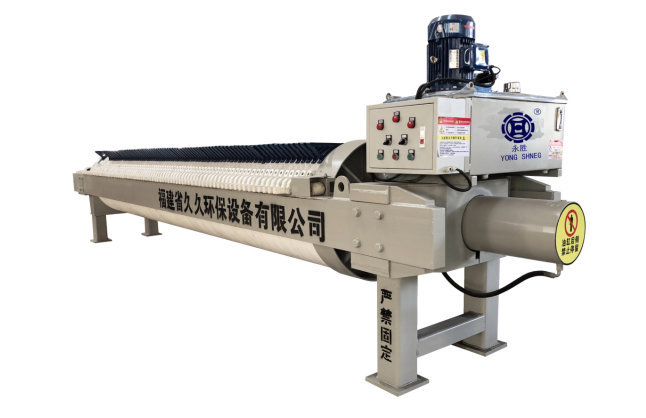
A High Efficiency Membrane Filter Press (HE-MFP) is a recessed-plate filter press whose plates are fitted with inflatable membranes. After the initial filling stage, the membranes expand and squeeze the filter cake a second time, driving out additional moisture. Compared with a standard hydraulic press, the HE-MFP delivers up to 18 % drier cake, 15 % shorter cycle times, and up to 30 % lower energy per tonne of solids—numbers that auditors love to see on sustainability reports.
Key Design Tweaks That Make It “High Efficiency”
- Variable-volume membranes: Polypropylene or TPE diaphragms inflate to 10–16 bar, allowing uniform pressure distribution across the chamber.
- Core blowing & wash manifolds: Integrated air knives push remaining slurry out of the feed eye, preventing dead zones.
- Fast-opening shifter: A roller-bar system moves groups of plates in under 90 seconds, slashing labour hours.
- Smart control logic: PLC algorithms optimise squeeze time based on real-time turbidity feedback—no more “guess and hope” cycles.
Where Do the Savings Actually Come From?
Let’s translate technical specs into cash. Suppose a mid-size mining concentrator dewaters 150 t d⁻¹ of copper tailings.
| Cost Centre | Conventional Press | HE-MFP | Annual Saving |
|---|---|---|---|
| Energy (kWh t⁻¹) | 4.2 | 2.9 | ≈ US$42 k |
| Polymer dosage (g t⁻¹) | 35 | 22 | ≈ US$65 k |
| Landfill haulage (30 % drier cake) | — | — | ≈ US$120 k |
Grand total? Just north of US$225 k every year—enough to pay back the CapEx delta in 14 months, even before you factor in carbon-credit revenue. Not bad for “just” a filter, huh?
Installation Pitfalls Nobody Mentions in the Brochure
Switching to a High Efficiency Membrane Filter Press is not plug-and-play. The three headaches we see on site audits are:
- Feed consistency: If the % solids varies ±3 %, the PLC cannot predict squeeze endpoint, and you lose the 5 % moisture advantage overnight.
- Air quality: Membranes hate oil mist. A sloppy compressor with a 5-micron filter instead of a 0.01-micron coalescer will blister the diaphragms within 18 months.
- Floor loading: HE-MFPs weigh up to 1.2 t per plate. A mezzanine install might need steel reinforcement—add 10 k USD you forgot in the budget.
Quick tip: Run a 30-day pilot with a rental unit first. The data will either bullet-proof your business case or save you from a costly mis-purchase.
Can It Handle My Slurry—Really?
We get this question daily, so here is the short answer: if your solids are non-compressible (think precipitated calcium carbonate, metal hydroxides, or coal fines) and the pH sits between 2 and 12, you are 90 % there. For compressible, high-clay gold tailings, add a small pre-thickener and target ≥45 % feed density; the membrane will still outperform any belt or vacuum filter. One customer in Ghana actually dropped cake moisture from 42 % to 26 % using this combo—pretty sweet when you’re paying by the tonne for cyanide destruction reagents.
Integration With Existing PLC Systems
Modern HE-MFPs come with an OPC-UA server baked into the HMI. That means your DCS can read cycle stage, hydraulic pressure, and cloth condition without extra gateways. One caveat: the OEM’s default tag list uses 32-bit floats, which older Modicon PLCs truncate; you will need a quick datatype remap, but after that the data flows smooth like butter.
Maintenance: How Low Can You Go?
Traditional presses chew through cloths every 3–6 months. Thanks to double-sided cake discharge and automatic cloth washing rails, HE-MFP cloths last 9–14 months on average. Membranes? Expect 4 000–6 000 cycles, or roughly 3 years in a 24/7 operation. And because the unit reaches target dryness faster, your hydraulic pump runs 25 % fewer hours, extending HPU seal life by a similar margin. Translation: you will swap more drip-pans than major components.
Future-Proofing: Industry 4.0 Upgrades Already Available
Edge-computing modules now bolt right onto the C-frame. They crunch vibration and pressure signals to predict when a membrane will fail—usually 2–3 weeks in advance. Customers running this predictive model report 40 % fewer unplanned shutdowns. Add a cloud dashboard and your reliability engineer can check press health from, well, the beach. (Just don’t tell the boss I said that.)
Bottom Line: Is a High Efficiency Membrane Filter Press Worth It?
If your annual slurry volume exceeds 50 000 t and disposal cost is >US$30 per wet tonne, the math is brutally simple: the HE-MFP saves money, water, and time. Yes, you will need to sweat the install details, but once it’s dialed in, the machine quietly prints cash while your competitors still babysit labour-intensive belt filters. So the only real question left is: how much longer can you afford not to upgrade?